

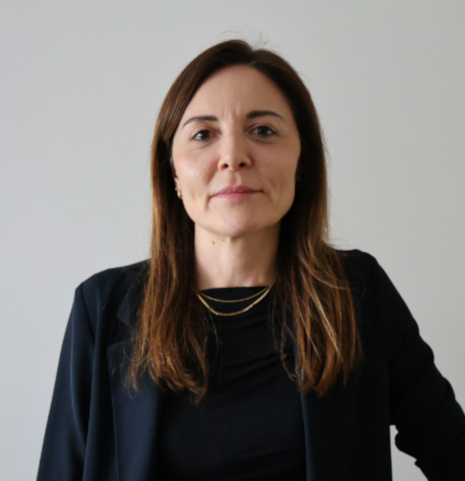
Valentina Iachetta
Head of Planning & Controlling
Management control goes far beyond mere numbers: it acts as a bridge between data, strategies and people. Valentina Iachetta, Head of Planning & Controlling, shares her insights on how strategic vision, flexibility and inclusive leadership can transform planning into a tool of real value for the company. From process digitalisation to sustainability, not forgetting the building of cohesive and motivated teams, we discover how the work of the controller makes a tangible contribution to better-informed decisions, measurable results and sustainable growth.
In 2026, given the current geopolitical uncertainty, how do we balance the need for long-term planning with a world that is changing week by week?
For me, planning today means first and foremost knowing how to balance ‘vision’ and ‘adaptability’. On the one hand, I firmly believe in the importance of a medium- to long-term perspective, because that is what guides strategic decisions, provides clear direction and helps people work in a more aligned way. On the other hand, our day-to-day experience confirms just how essential it is to be flexible and able to adapt to a rapidly changing environment.
Working within a large industrial group such as ours, with complex programmes and long investment cycles, we clearly cannot afford to be constantly changing direction. At the same time, we need to keep an eye on the outside world and be quick to pick up on signs of change.
In practical terms, this means setting out a clear course of action, but also creating the conditions to be able to review it when necessary; in other words, having the tools to develop alternative scenarios, regularly update forecasts, and use indicators that help us anticipate trends.
The Budget Plan, which we draw up every year, is a vital tool and undoubtedly provides an accurate snapshot of our intentions at any given time. However, in my experience, the real value generated by the planning process lies in the ability to interpret what is happening and to think ahead in terms of the business. That is what enables us to make better-informed decisions and adapt more effectively.
Looking back on your career, what challenges have you faced as a woman in the traditionally male-dominated world of finance, and what added value do you think female leadership brings today?
Talking about female leadership is more complicated than it seems, because there is a risk of listing ‘typically feminine’ qualities and unwittingly reinforcing the very stereotypes we are trying to overcome.
Looking back on my experience so far, I’ve had the opportunity to work with a wide variety of people, both men and women, which has taught me that leadership has no gender. What really makes the difference is the way you choose to lead people and make decisions.
I am a firm believer in the importance of challenging oneself every day, in the value of listening, and in building trust within teams.
I wholeheartedly share the view that creating working environments where diversity can flourish strengthens organisations and improves the quality of decision-making. Experience consistently shows that a diversity of perspectives often leads to more sound and balanced decisions, and that dialogue helps us identify opportunities that we would struggle to spot on our own.
This is why it is important for companies not merely to recognise the value of gender diversity, but to invest increasingly in clear policies, transparent rules and practical tools that promote inclusion and empower talent.
How do digitalisation and sustainability lead to measurable results and lasting value for the company?
In practical terms, digitalisation means making processes more structured, traceable and rooted in reliable data. It is not simply a matter of introducing new technologies, but of rethinking the way information is collected, shared and used in the decision-making process.
When processes are digitised, data becomes available more quickly, consistently and verifiably. That allows us to develop clearer indicators, monitor performance more continuously and take prompt action when variances or opportunities for improvement arise.
This means digitalisation translates directly into measurable results: shorter processing times, higher data quality, greater transparency and an improved ability to make informed decisions. There is also another very important aspect: digitalisation frees people up from repetitive manual tasks. This lets them devote more time and energy to analysis, cross-functional cooperation and supporting strategic decision-making.
Sustainability ties in with this approach. Investing in efficiency, safety and resilience means not only acting responsibly towards the environment and society, but also building lasting value for the company. In management control, we follow a simple rule: what an organisation chooses to measure carefully and regularly is what it actually manages to improve over time.
If you could give just one piece of advice to a young controller looking to thrive in this role, what would it be and why?
Before building ‘perfect’ models, learn to ask the right questions.
Viewed from the outside, management control may seem primarily about reports, tables and figures. In fact, it is much more than that. Method and precision are essential, but the role of the controller goes far beyond the technical side of things.
First and foremost, it is about understanding what the figures tell us and being able to analyse them, because behind every piece of data there is always a story: a project getting off the ground, an investment taking shape, a process that could run more smoothly. This is the controller’s role: to interpret those figures, relate them to what is happening within the business, and help the organisation make more enlightened decisions.
It is a role that requires curiosity, collaboration and constant interaction with people working across different departments. And often, the most valuable moment comes not while staring at an Excel spreadsheet, but rather while talking with a colleague who is explaining how a process actually works, or what the operational challenges of a project are.
This approach changes everything: work becomes more stimulating, data takes on new meaning, and you also gain a greater sense of personal satisfaction from knowing that your contribution really does make a difference.
Any message you'd like to share?
In large and complex organisations, it is easy to believe that an individual’s contribution is marginal, just a small part of a much larger system.
Experience, however, suggests otherwise: companies change and improve thanks to the day-to-day work and commitment of their people. I can think of many situations I have experienced first-hand: a decision taken with a sense of responsibility, a process made more efficient, an idea shared at the right moment, a colleague supported in their professional development. These are tangible actions which, when added up over time, generate real and lasting value for the organisation.
That is why it is vital that everyone should feel like a key player, not a bystander. Aware of the importance of their contribution, focused on improvement, and capable of seeing beyond their immediate tasks.
Not just for the sake of the company: above all, as an investment in themselves and their own future.